What test and tag actually is
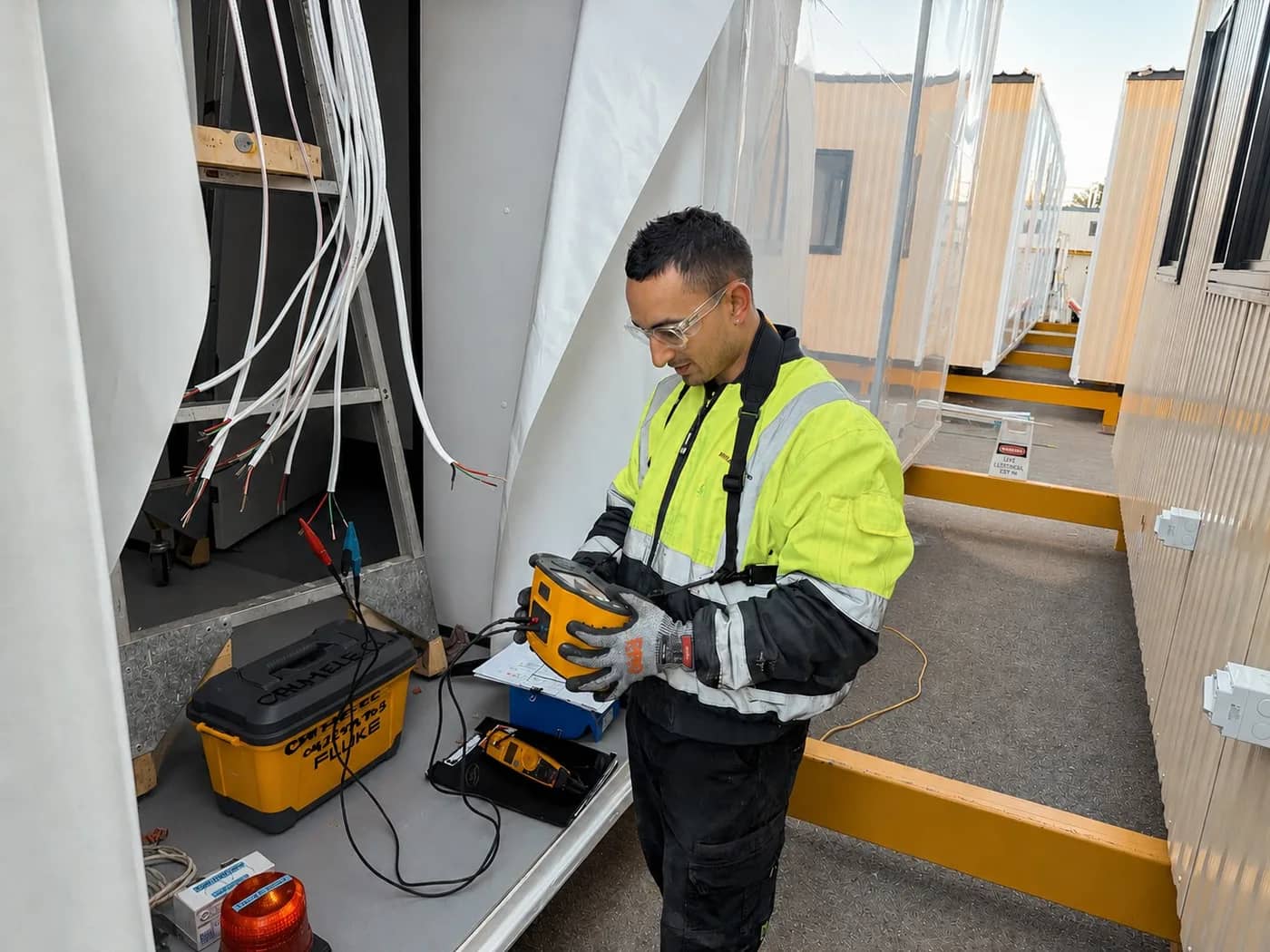
Test and tag is the in-service inspection of anything that plugs in: power leads, extension leads, power boards, portable RCDs, hand tools, kettles, computers, chargers, portable heaters and the equipment your people carry between sites. Each item gets a visual inspection for damage, then an electrical test, then a durable tag showing who tested it, when, and when it's next due. The point is catching a cracked plug, a nicked lead or a failed earth before somebody finds it the hard way.
It sits alongside, not instead of, the fixed-wiring side of electrical compliance. The wiring in your walls is covered by RCD testing and periodic inspection. Test and tag covers everything plugged into it.
How often, by the kind of site
AS/NZS 3760 sets the interval by the environment the equipment lives in, not by the type of equipment. Harsher conditions, more often.
| Environment | Typical interval |
|---|---|
| Construction, demolition and mining sites | 3 months |
| Factories, workshops and warehouses, where equipment is moved or flexed | 6 to 12 months |
| Commercial kitchens, hire equipment and equipment used outdoors | 6 to 12 months |
| Schools, where equipment is handled by students | 12 months for most areas, shorter in workshops and labs |
| Offices and other low-risk spaces where equipment stays put | Up to 5 years, with portable RCDs still tested more often |
| Portable RCDs, any site | Push-button test 3-monthly, full test 12-monthly |
Those are the standard's typical intervals. Your own safety system, your insurer or a head contractor's site rules can set shorter ones, and on a construction site they usually do. We'll work to whichever is tighter and put the next-due date on the tag.
What we actually test
- Visual inspection. Plug, socket, lead, casing, guards, strain relief and any sign of heat, cuts or crushing. Most failures are found here.
- Earth continuity on Class I equipment, so a fault in the appliance goes to earth rather than through the person holding it.
- Insulation resistance, confirming the live parts stay isolated from anything touchable.
- Polarity and correct connection on leads and power boards, which is where site-made leads come unstuck.
- Portable RCD testing, push-button and trip time, the same test regime as the RCDs in your board.
What you get
A durable tag on every item with the test date, the next due date and who did it. An asset register listing each item, its location, its result and its history, so you can see what failed last time and what's about to come due. A list of anything that failed, what we did about it, and what it cost. The register is yours: if you change electricians it goes with you.
Why having an electrician do it matters
AS/NZS 3760 calls for a competent person, and in South Australia the testing itself doesn't have to be done by a licensed electrician. Repairs do. That's the practical difference. A tester who isn't an electrician finds a damaged lead, tags it out and leaves it for you to organise. We find the same lead, replace the plug or the lead, retest it and put it back into service before we leave, and if the fault turns out to be in the wall rather than the appliance, we're already licensed to deal with that too.
It also means the visit can carry the rest of the compliance round: RCD testing, emergency and exit lighting, switchboard checks and anything on the maintenance list. 1 attendance, 1 set of records, no separate contractor to book.