What the standard is for
An ordinary 30 mA safety switch is designed to stop a fatal shock to a healthy person through the skin. A patient with an electrode on their chest, a probe in their body or a wet dressing has that protection bypassed; far smaller currents can be dangerous. AS/NZS 3003 exists so the electrical installation in rooms where that happens is built to a tighter tolerance. It classifies areas as body-protected or cardiac-protected depending on how close the connection gets to the heart.
Which rooms need one
| Room | Classification |
|---|---|
| Consulting room where only examination is done, no mains equipment on the patient | Usually not classified, but check |
| Treatment room, procedure room, dental surgery | Body-protected |
| Physiotherapy with electrotherapy, ultrasound, TENS | Body-protected |
| ECG, sleep studies, any monitoring room | Body-protected |
| Rooms where a conductor is placed in or near the heart (cardiac catheter, some theatres) | Cardiac-protected |
| Waiting room, reception, offices, staff room | Not classified |
The classification is decided by what happens in the room, not by what it's called. A "consulting room" that's used for minor procedures with mains equipment is a body-protected area. We work through each room with the practice manager and write it down, because that list is what the fit-out, the testing and the accreditation audit all refer back to.
What's different about the electrical installation
- 10 mA RCDs on the circuits supplying the patient area, rather than the standard 30 mA.
- Equipotential earthing with an earth bar in the room and earth connections for equipment, so everything a patient could touch is at the same potential.
- Marked outlets: socket outlets in the protected area carry identification so staff know which outlets are covered.
- Dedicated circuits for the area, separated from general power.
- A record of the classification, the installation and every test.
Testing
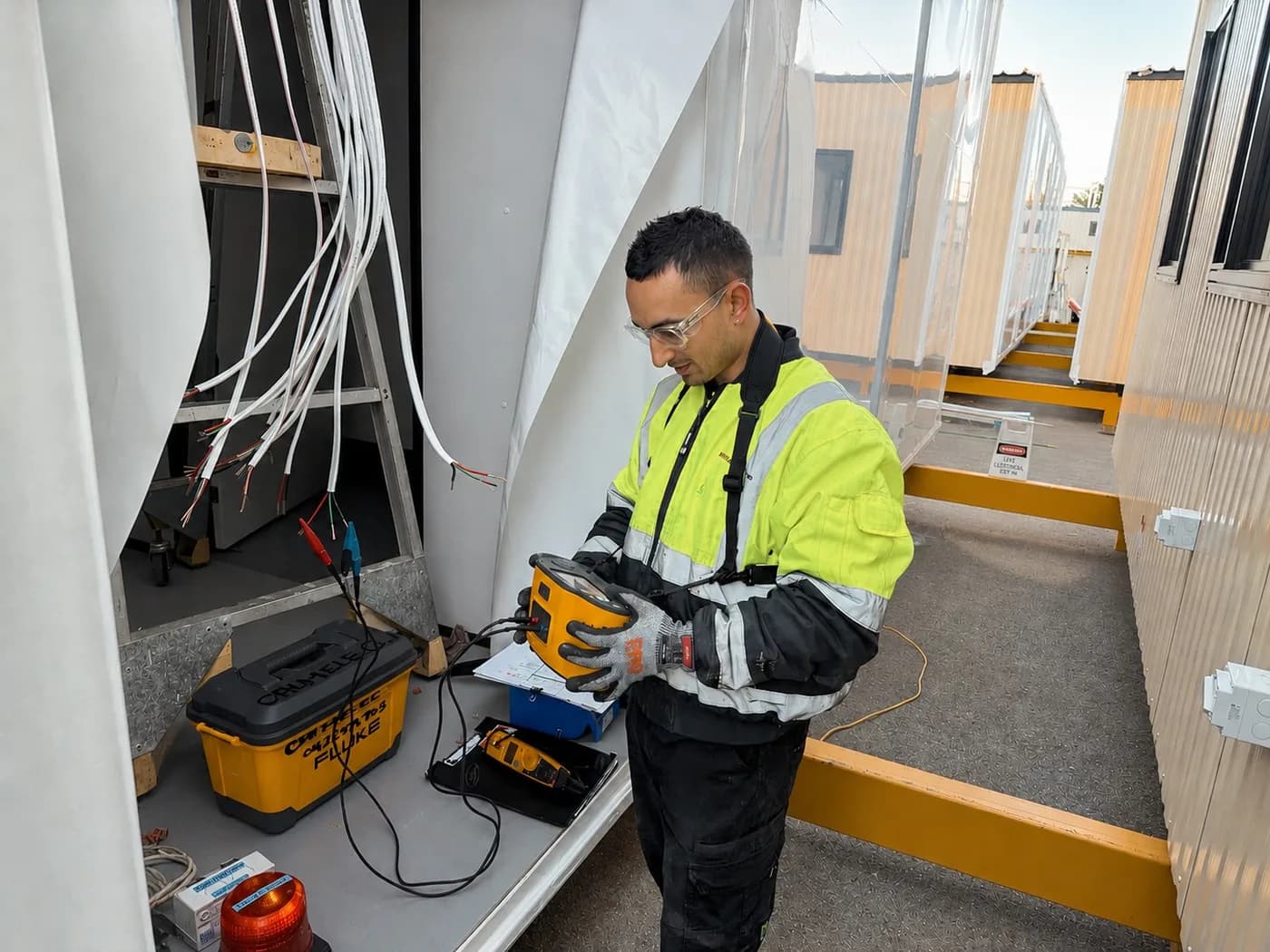
AS/NZS 3003 requires the protected area to be tested after installation and then periodically, in practice every 12 months: the RCDs' trip current and time, the equipotential earthing resistance, and the outlets. The results are recorded and kept on site. Practice accreditation (RACGP, QIP, NSQHS and the like) checks for the record, and so does the certifier on a new fit-out. Our compliance testing service folds this into the same annual visit as the RCD and emergency lighting tests.
The fit-out mistake
The expensive version of this story is a medical tenancy fitted out by a general commercial electrician who didn't know the rooms needed classifying. The walls close, the practice opens, and the accreditation auditor asks for the AS/NZS 3003 record. Retrofitting 10 mA protection and equipotential earthing into finished rooms costs several times what it would have cost during the fit-out. If you're planning a health and medical fit-out, get the room classification done at the drawing stage.
Need this done rather than read about? See switchboards, testing & compliance or request a free quote.